



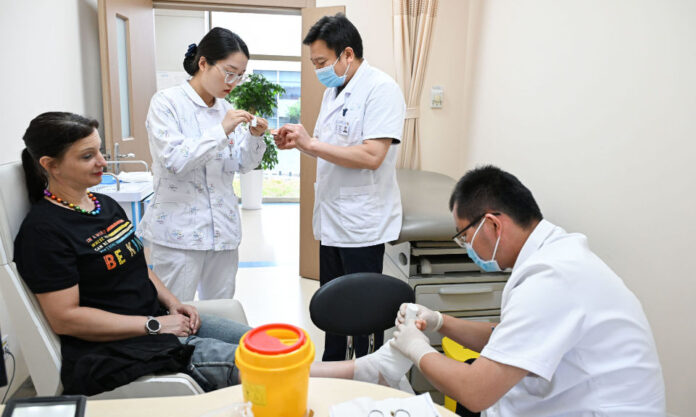



Now the arithmetic is changing. For many western patients, a flight to China for medical work, dental treatment or an eye procedure costs less than at home. Add a few days in Shanghai, Hangzhou or Hainan, and the package looks unusually sensible.
现在,这笔账正在悄悄变样:对许多西方患者来说,飞来中国做医疗、牙科或视光治疗,花费可能比留在本国更低。再加上在上海、杭州或海南住上几天,这趟行程很容易就从“看病”变成了一次相当划算的旅行。
The pressure starts at home. In Australia, one Herald Sun report found a standard dental check-up and clean could cost as much as A$441 in Sydney’s Paddington. Another Guardian report said millions were skipping or delaying specialist care because of cost. In the United States, Axios reported that nearly 9.6 million adults may have travelled abroad for dental work. When care gets that expensive, the airport begins to look like a reasonable waiting room.
压力首先来自本国市场。澳大利亚《Herald Sun》的一篇报道指出,悉尼帕丁顿区一次标准的牙科检查加洗牙,价格可以高达441澳元。《卫报》则报道,数百万澳大利亚人因为费用过高而推迟或放弃专科就诊。美国方面,Axios称近960万美国成年人可能曾出国接受牙科治疗。当医疗账单高到这个程度,机场就会开始像一间合理的候诊室。
According to Southern Weekly and a second WeChat report, that is the heart of the story. People are not coming to China for glamour. They are coming because the numbers make sense. A treatment that looks impossible at home can become possible here; a treatment that is possible at home can become cheaper here, especially when the trip doubles as a break.
根据《南方周末》和另一篇微信报道,这正是故事的核心。人们来中国并不是为了“体验奢华”,而是因为账算得过来。本来在本国难以承受的治疗,在这里可能变得可行;本来在本国勉强可做的项目,在这里往往更便宜,尤其当这趟行程还能顺便休个假时。
Why the Numbers Now Work
为什么这笔账如今算得过来
Dentistry is the clearest case. Implants, crowns, bridge work and cosmetic repairs can run into painful sums in many western countries, especially where public systems cover little or nothing. China has a deep bench of dental centres, including three national oral medicine centres under the National Health Commission framework. That matters. Patients are not choosing between cheap and safe; they are increasingly choosing between high costs at home and high-level care at a lower price in China.
牙科是最直观的例子。在许多西方国家,种植牙、牙冠、桥体修复和美容修复的费用都可能高得吓人,尤其是在公共医疗体系覆盖有限甚至几乎不覆盖的地方。中国则拥有一批实力很强的口腔机构,其中包括国家卫健委体系下的三家国家口腔医学中心。这一点很重要。患者面对的并不再是“便宜”和“安全”的二选一,而是“本国高价”和“来华接受高水平治疗且价格更低”的比较。
Optometry and eye care tell a similar story. Glasses, scans, specialist consultations and some forms of vision correction can add up quickly in the West. In China, big-city hospitals and specialist eye chains have built a large, modern market around routine eye care and laser correction. For the patient, that means more choice, shorter waits and less sticker shock.
视光和眼科的情况也类似。在西方,配镜、检查、专科门诊和部分视力矫正项目很快就会累积成不小的开支。中国的大城市医院和眼科连锁机构,则已经围绕常规眼科和激光矫正搭建起一个规模庞大、设施现代的市场。对患者来说,这意味着选择更多、等待更短,账单也不再那么吓人。
China’s wider hospital system also helps explain the confidence gap. The National Health Commission has built a network of national and regional medical centres aimed at lifting standards and spreading specialist capacity. That is not just policy language. It is part of why many Chinese tertiary hospitals now look and feel like places where a foreign patient can walk in, get seen and trust the system enough to book the next appointment.
中国更大的医院体系,也解释了这种信心从何而来。国家卫健委已经搭建起国家医学中心和区域医疗中心网络,目标就是提升标准、扩散专科能力。这不只是政策术语。它也是为什么许多中国三甲医院如今看上去、运转起来都更像那种外国患者可以放心走进去、顺利接受治疗并愿意预约下一次复诊的地方。
Quality, Not Just Price
不只是便宜,更是靠谱
The other half of the appeal is simple. A patient can turn treatment into a trip. That matters more than it sounds. If someone is already flying thousands of miles for dental work or a specialist appointment, then a week in China is no longer a luxury add-on; it becomes part of the value. The same journey can include a city break, decent hotels, good food and a bill that is still lower than the one back home.
吸引力的另一半很简单:患者可以把治疗和旅行合在一起。这一点比听上去更重要。如果一个人已经为了牙科或专科诊疗飞行数千英里,那么在中国待上一周,就不再只是“额外消费”;它本身就是价值的一部分。同一趟行程里,既有城市旅行、合适的酒店和不错的餐饮,最后的总账单仍然可能比本国更低。
That does not mean the risks disappear. Aftercare still matters. Translation still matters. Patients still need to know exactly what they are getting and how follow-up will work once they fly home. But the trend is real enough to be hard to ignore. Medical travel used to mean chasing a bargain at any price. In China’s case, it increasingly means chasing quality without paying western-country rates.
这并不意味着风险消失了。术后照护依然重要,翻译依然重要,患者也仍然需要清楚知道自己做的是什么,以及回国后如何继续复诊。但这个趋势已经真实到无法忽视。过去,医疗旅行往往意味着不计代价地追逐便宜;而在中国,这件事越来越像是在不掏西方那种价钱的前提下,去获得高质量治疗。
And that is why the opening line now feels less like a tease and more like a fact. For a growing number of western patients, China is no longer just a place to visit. It is becoming a place to get fixed, to recover and to save money while doing it.
这也正是为什么开头那句话,如今听起来不再像是一个噱头,而更像一个事实。对越来越多的西方患者来说,中国已经不只是一个旅游目的地;它正变成一个能看病、能恢复、还能顺手省下一大笔钱的地方。