



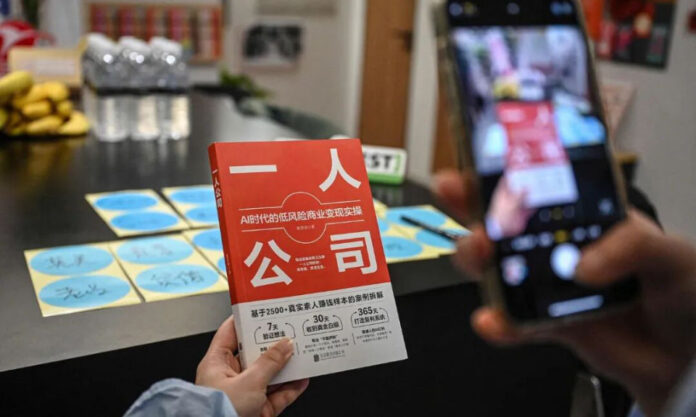


There was a time when starting a company meant fluorescent offices, ringing telephones and a payroll which caused insomnia. Now, in China’s AI age, it can be more akin to a laptop glowing on a kitchen table after midnight; alone, as its company founder takes a shower….
曾经有一段时间,创办一家公司意味着荧光灯办公室、响亮的电话和导致失眠的工资单。现在,在中国的人工智能时代,它更像是午夜后厨房桌子上发光的笔记本电脑;独自一人,公司创始人正在洗澡……
That image sits at the heart of the so-called “one person company”, or OPC, a term now gaining real traction in China. In the legal sense, a one-person firm has existed for years; in the UK for example, they are defined, for tax purposes, as “sole traders”. Think the hairdresser with their own barber shop, or the old Pakistani guy with the corner shop.
这种形象是所谓的“一人公司”(OPC)的核心,这个词现在在中国获得了真正的关注。从法律意义上来说,一人公司已经存在多年;例如,在英国,出于税收目的,他们被定义为“个体经营者”。想想拥有自己的理发店的理发师,或者拥有街角小店的巴基斯坦老家伙。
In the modern sense, however, it means something sharper; one founder using AI tools, digital platforms and automation to do the work that once demanded a whole team.
然而,在现代意义上,它意味着更尖锐的东西。一位创始人使用人工智能工具、数字平台和自动化来完成曾经需要整个团队才能完成的工作。
This is why the idea has travelled so quickly from buzzword to business model. In Shanghai, where the concept has been especially warmly received, entrepreneurs are already using AI to write copy, generate designs, analyse data, handle customer service and even imitate the sales’ instincts of a top-performing employee. The founder is still alone, but the company is not exactly lonely.
这就是为什么这个想法如此迅速地从流行语转变为商业模式。在上海,这个概念特别受到热烈欢迎,企业家已经在使用人工智能来撰写文案、生成设计、分析数据、处理客户服务,甚至模仿表现最好的员工的销售本能。创始人仍然孤独,但公司并不完全孤独。



That distinction matters. A one person company is not simply freelancing with a shinier business card. It promises legitimacy, scale and, crucially, the ability to appear larger than the human body at its centre. Big clients may hesitate before hiring a lone individual; they tend to relax when there is a registered company, a polished workflow and the suggestion that someone, somewhere, is answering the emails.
这种区别很重要。一个人的公司不仅仅是拥有一张更闪亮的名片的自由职业者。它保证了合法性、规模,而且最重要的是,它能够显得比其中心的人体更大。大客户在雇用单独的个人之前可能会犹豫;当有一家注册公司、完善的工作流程以及有人在某个地方正在回复电子邮件的建议时,他们往往会放松。
One Founder, Many Tools, and a Very Different Working Day
The real story here is not that people want to work less. It is that technology has changed the shape of effort itself. The modern founder can now assemble a virtual workforce from software subscriptions and smart prompts. One tool drafts a proposal, another edits a video, a third tracks finances, while an AI agent keeps the operation moving long after the founder has finally gone to bed.
这里的真实情况并不是人们想要减少工作。而是技术改变了努力本身的形式。现代创始人现在可以通过软件订阅和智能提示来组建虚拟员工队伍。一个工具起草提案,另一个工具编辑视频,第三个工具跟踪财务状况,而人工智能代理则在创始人最终上床睡觉后很长时间内继续运营。
China is unusually fertile ground for this shift. As South Views points out, the country’s digital infrastructure is already built for speed; payment systems are frictionless, logistics are mature and audiences are gathered on giant content platforms where a niche idea can find buyers by lunchtime. In that environment, the distance between concept and commerce has grown startlingly short.
中国是这种转变异常肥沃的土壤。正如 South Views 指出的那样,该国的数字基础设施已经是为了速度而建设的;支付系统顺畅,物流成熟,受众聚集在巨大的内容平台上,在这些平台上,一个利基创意可以在午餐时间找到买家。在这种环境下,概念和商业之间的距离变得惊人地短。
There is also a wider economic logic behind the trend. One person companies thrive in modern services, where customers increasingly pay for taste, expertise, personality and responsiveness rather than industrial scale. If the product is a brand voice, a design concept, an advisory service or a cultural idea, being small is not always a weakness; sometimes it is the entire selling point.
这一趋势背后还有更广泛的经济逻辑。个人公司在现代服务业中蓬勃发展,客户越来越多地为品味、专业知识、个性和响应能力而不是工业规模付费。如果产品是一种品牌声音、一种设计理念、一种咨询服务或一种文化理念,那么小并不总是一个弱点;有时它就是整个卖点。
Still, the romance should not be allowed to outrun the reality. A company of one can be nimble, but it can also be exhausting. The founder is chief executive, intern, salesperson and worrier-in-residence all at once. AI can shorten the to-do list, but it cannot fully absorb uncertainty, loneliness or the sinking feeling that comes when the pipeline suddenly goes quiet.
尽管如此,浪漫不应该超越现实。一个人的公司可以很灵活,但也可能很累。创始人同时是首席执行官、实习生、销售员和常驻担忧者。人工智能可以缩短待办事项清单,但它无法完全消除不确定性、孤独感或管道突然安静下来时产生的沮丧感。
Why China Is Becoming Fertile Ground for Solo Entrepreneurs
That is why the emerging ecosystem around OPCs may prove just as important as the software itself. In places such as Shanghai, dedicated communities and support schemes are beginning to offer registration help, legal advice, financial services and access to clients. The message is subtle but powerful; individual entrepreneurship works better when it is not entirely left to the individual.
这就是为什么围绕 OPC 的新兴生态系统可能与软件本身一样重要。在上海等地,专门的社区和支持计划开始提供注册帮助、法律咨询、金融服务和接触客户的服务。这个信息微妙但有力;当个人创业不完全由个人决定时,效果会更好。


What makes the one person company so fascinating, then, is that it challenges a very old assumption about work. For decades, ambition was measured by how many people sat beneath your name on an organisational chart. Now a new generation is asking a more unsettling question; what if success is not about managing more people, but about needing fewer?
那么,单人公司之所以如此令人着迷,是因为它挑战了一种非常古老的关于工作的假设。几十年来,衡量野心的标准是组织结构图上有多少人坐在你的名字下面。现在,新一代人正在提出一个更令人不安的问题:如果成功不是管理更多的人,而是需要更少的人怎么办?
That does not mean the office is dead, nor that everyone should resign and begin issuing invoices from a cafe. Plenty of businesses still need teams, hierarchy and the happy accident of colleagues sharing a room. But the OPC craze does suggest that work is being reorganised around capability rather than headcount, and around precision rather than bulk.
这并不意味着办公室已经消亡,也不意味着每个人都应该辞职并开始从咖啡馆开具发票。许多企业仍然需要团队、等级制度以及同事共享一个房间的快乐。但 OPC 热潮确实表明工作正在围绕能力而不是人员数量、围绕精度而不是批量进行重组。
Back with that lone laptop glowing after midnight. It may still look modest, even fragile, against the mythology of boardrooms and business parks. Yet in that small pool of light sits one of the most revealing symbols of China’s new economy; not the end of company-building, but its radical miniaturisation.
午夜过后,带着那台孤独的笔记本电脑回来。与董事会和商业园区的神话相比,它可能仍然显得谦虚,甚至脆弱。然而,在那小小的光池里,却隐藏着中国新经济最具启发性的标志之一。不是公司建设的结束,而是公司彻底小型化的结束。