


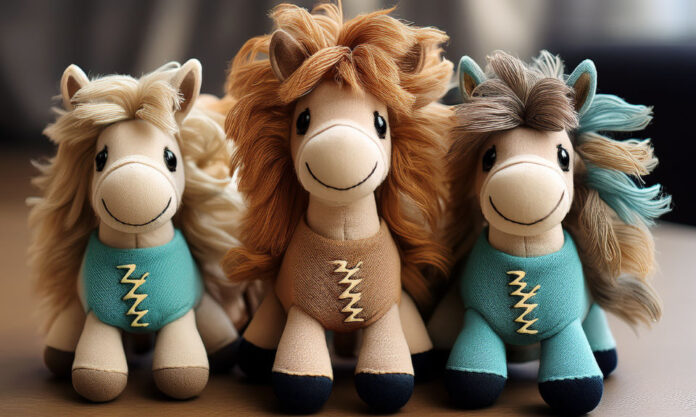


Cute soft toys. Stuffed toys. Cuddly toys. Call them what you will, and then stop to ask from where does the craze for such cuties come? And from where do they themselves all originate? The answers are not just surprising, but also very, very local!
可爱的毛绒玩具。毛绒玩具。可爱的玩具。你想怎么称呼他们就怎么称呼他们,然后停下来问问对这些可爱的人的热潮从何而来?它们本身又来自哪里?答案不仅令人惊讶,而且非常非常本地化!
With all that has been going on the our crazy world recently, it is perhaps no surprise that cuddly toys have become the most popular fashion items in the world over the last 2 years, for their simple offering of comfort from many of the current hard realities which face almost every one of us today.
鉴于最近我们疯狂的世界发生的一切,毛绒玩具在过去两年中成为世界上最受欢迎的时尚物品也许并不奇怪,因为它们简单地为我们今天几乎每个人面临的许多当前艰难现实提供了安慰。
Among those realities are of course businesses built to capitalise on some of our most primal desires, even those just for something cuddly.
当然,在这些现实中,有些企业是为了利用我们一些最原始的愿望而建立的,即使这些愿望只是为了一些可爱的东西。
Heard of the brand called Jelly Cat which took the world by storm storm last year? Where do you think they are made? From where do you think Disney gets its stuffed toys? And what about Costco; from where does this retail behemoth source its stuffed toys?
听说过去年风靡全球的 Jelly Cat 品牌吗?您认为它们是在哪里制造的?您认为迪士尼的毛绒玩具是从哪里获得的? Costco 又如何呢?这家零售巨头的毛绒玩具从哪里采购?
It may not be much of an exaggeration to say that, in most cases, surprisingly, the answer is in fact sleepy Yangzhou in Jiangsu Province.
可以毫不夸张地说,在大多数情况下,令人惊讶的是,答案实际上是江苏省沉睡的扬州。
Today, the market for plush toys is ever expanding, so much so that many scenic areas now treat them as a top souvenir. Data shows fully half of these so called “plush dolls” in China are now produced in Yangzhou. Worldwide, one out of every three plush toys might as well bear the label “Made in Yangzhou”.
如今,毛绒玩具的市场不断扩大,不少景区都把毛绒玩具作为顶级旅游纪念品。数据显示,中国这些所谓的“毛绒娃娃”中有一半是在扬州生产的。在世界范围内,每三个毛绒玩具中就有一个贴有“扬州制造”的标签。

With annual exports of ¥3-4 billion to the USA and Europe alone, the City’s dominance in the sector has even earned itself a joke; “If Yangzhou’s plush-toy manufacturers collectively stopped production, Christmas would have lost half its joy”.
仅对美国和欧洲的年出口额就达 3-40 亿日元,该市在该领域的主导地位甚至为自己赢得了笑话。 “如果扬州的毛绒玩具厂家集体停产,圣诞节就失去了一半的欢乐”。
But when it comes to the beginning of Yangzhou’s cuddly-toy industry, almost all accounts begin in the 1950s, as the offical WeChat account “正和岛” reports.
但据官方微信账号“正和岛”报道,谈到扬州毛绒玩具产业的起步,几乎所有的账户都始于20世纪50年代。
At that time, many people in Yangzhou relied on making a living as tailors. These skilled professionals made toy dolls using the lace borders left over from exported garments. Producing them first as toys for children, they then slowly trod the path of commercialism and industrialisation.
当时,扬州不少人靠做裁缝为生。这些熟练的专业人员利用出口服装留下的蕾丝边制作玩具娃娃。他们首先将它们生产为儿童玩具,然后慢慢走上了商业化和工业化的道路。
But looking to a longer historical dimension, the people of Yangzhou in fact have a heritage of ingenuity engraved in their bones.
但放眼更长远的历史维度,扬州人骨子里其实有一种匠心传承。
Yangzhou is known as the birthplace of the the Beijing-Hangzhou Canal. Hence a flourishing millennium of shipping and merchants have also played a significant role in Yangzhou’s textile culture.
扬州被誉为京杭运河的发源地。因此,千百年来的航运和商贾的繁荣,也对扬州的纺织文化产生了重要的影响。
During the Tang Dynasty, Yangzhou cashmere (“ronghua”) was a palace tribute, while the techniques employed therein were to become the foundations for today’s stuffed-toy industry.
唐代,扬州羊绒(“绒花”)是宫廷贡品,其技术成为当今毛绒玩具行业的基础。


Back in the modern era, 1958 saw the Yangzhou Red Star Sewing Factory converted to become the first toy enterprise in Yangzhou. And hence the export market began.
回到近代,1958年,扬州红星缝纫厂改制为扬州第一家玩具企业。出口市场由此开始。
With China’s opening, so too did globally-renowned brands such as Disney and Hello Kitty begin to recognise Yangzhou’s production technology and quality standards in the 1980s, and subsequently chose to place production orders.
随着中国的开放,迪士尼、Hello Kitty等全球知名品牌在20世纪80年代也开始认可扬州的生产技术和质量标准,并随后选择下订单生产。
Despite its preeminent position in the market, the storm clouds have more recently been gathering on the Yangzhou cuddly-toy horizon.
尽管扬州毛绒玩具市场地位举足轻重,但近期乌云密布。
As with much global-supply manufacturing which was dominated by China for the past 3 decades, stuffed toy production is gradually finding new cheaper homes elsewhere in Southeast Asia.
与过去三十年中中国主导的许多全球供应制造业一样,毛绒玩具生产也逐渐在东南亚其他地方找到了更便宜的新产地。
To offset this, Yangzhou has set up a satellite-production centre in nearby Tianchang of Anhui Province. Again, it’s cheaper. Then there is another bright spot in the form of AI; last November, Huawei launched its AI toy Smart Huan Huan, and with a price tag of ¥399, the ripples were quickly felt throughout the traditional-toy industry.
为了抵消这一影响,扬州在附近的安徽省天长市建立了卫星生产中心。再说一次,它更便宜。然后还有一个亮点就是AI的形式;去年11月,华为推出AI玩具智能欢欢,售价399元,迅速波及整个传统玩具行业。
All this notwithstanding, demand is not showing any sign of slowing, and while high-profile brand names will come and go, Yangzhou appears relatively safe in its position as market leader. Until the world comes to its senses, that is.
尽管如此,需求并没有出现任何放缓的迹象,尽管知名品牌会来来去去,但扬州作为市场领导者的地位似乎相对安全。也就是说,直到世界恢复理智。