



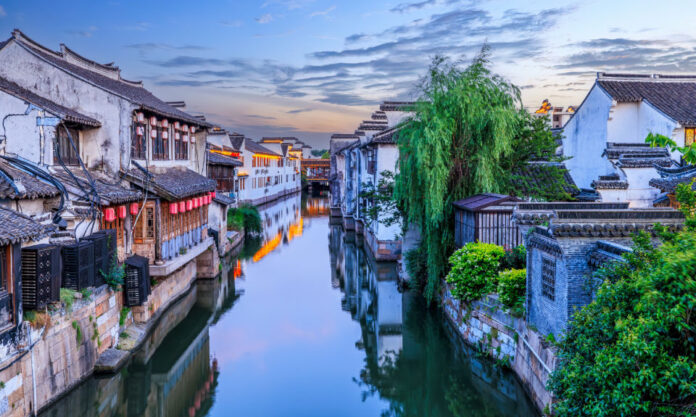



Canals, train lines and conference halls have all had a hand in Jiaxing’s rise, but the city still starts with water. South Lake gave it national memory; silk gave it trade; and Wuzhen later gave it a place on the digital map.
嘉兴的气质,先从水开始。运河、铁路和会展中心都参与了它的成长;南湖给了它国家记忆,丝绸给了它商贸底色,而乌镇后来又把它送上了数字时代的地图。
According to Chinese reference material on South Lake, the Red Boat and Jiaxing’s transport network, this is a city that has never stayed in one lane for long. It was built on canal commerce and old-town streets, but its present-day reach now runs through ports, trams, high-speed rail and the wider Yangtze River Delta economy.
根据南湖、红船以及嘉兴交通网络等中文资料,嘉兴从来不是一座只守着一条路走下去的城市。它起于运河商贸和老城街巷,如今的触角却已伸向港口、有轨电车、高铁和更大的长三角经济圈。
South Lake Still Anchors The Story
南湖依然是这座城的起点
South Lake remains Jiaxing’s strongest landmark because it is not just scenic; it is symbolic. The lake and the Red Boat are tied to the closing chapter of the First National Congress of the Communist Party of China, which gives the city a political and cultural weight far beyond its size.
南湖至今仍是嘉兴最重要的地标,因为它不只是风景,更是象征。南湖和红船与中共一大的闭幕地紧密相连,这让嘉兴拥有了远超其城市体量的政治与文化分量。


That history is visible rather than hidden. The lakefront, the memorial route and the surrounding museums make South Lake a place where school groups, party study tours and ordinary visitors all walk the same ground. Jiaxing Museum on Haiyantang Road adds a broader picture, with exhibitions that trace the city from prehistory to the modern era.
这种历史并没有被收进玻璃柜里,而是直接摆在眼前。湖边、纪念线路和周边场馆,让学生团体、党建团队和普通游客走在同一片土地上。位于海盐塘路的嘉兴博物馆则把视野拉得更开,从史前时期一直讲到今天。
The city’s older commercial identity has not vanished either. Jiaxing was long known for silk, and that trading habit still shapes its local business culture. It helps explain why private enterprise remains so central here; Jiaxing tends to think in terms of supply chains, not slogans.
嘉兴更早的商业身份也没有消失。它长期以丝绸著称,而那种做生意的习惯至今仍塑造着本地的商业文化。这也解释了为什么民营经济在这里始终重要;嘉兴更习惯谈供应链,而不是空话。
Wuzhen Pushes The City Outwards
乌镇把嘉兴推向更远的地方
Then there is Wuzhen, which gives Jiaxing a second and very different face. In Chinese reporting, the water town is often described first as a preserved Jiangnan town and then as the permanent home of the World Internet Conference. That pairing matters. It says Jiaxing can host ancient bridges and global tech leaders in the same city family.
还有乌镇。它给嘉兴提供了第二张、而且完全不同的面孔。中文报道里,乌镇常常先被写成江南古镇,再被写成世界互联网大会的永久会址。这个组合本身就说明了问题:嘉兴可以把古桥和科技领袖放进同一个城市家族里。


The result is a city that has learned how to sell itself without losing its local shape. Wuzhen brings visitors, media and international attention; the city centre still supplies the slower, more ordinary life that keeps Jiaxing from feeling like a stage set.
结果就是,嘉兴学会了把自己卖出去,却没有丢掉本来的样子。乌镇带来游客、媒体和国际关注;而老城依旧提供那种更慢、更日常的生活,让嘉兴不至于变成一座只会摆拍的城市。
Transport now pulls the whole picture together. Jiaxing South Station on the Shanghai-Hangzhou high-speed railway has turned the city into a quick stop between major hubs; city transport material also describes Jiaxing as about half an hour by high-speed rail from Shanghai and Hangzhou, with rail links helping to pull in Ningbo and Suzhou as well. Jiaxing South Lake Airport, meanwhile, opened in 2025 as a military-civilian airport with a cargo-heavy role, pushing the city further into logistics and air freight.
交通把这幅图景真正连成了一体。沪昆高铁上的嘉兴南站,让这座城市成为上海和杭州之间一个很快就能到达的停靠点;城市交通资料也把嘉兴描述为可通过高铁在约半小时内抵达上海和杭州,而铁路网络也在把宁波和苏州更紧地拉进来。与此同时,嘉兴南湖机场于2025年启用,定位为军民合用、偏重货运的机场,进一步把嘉兴推向物流和航空货运。
That is why Jiaxing feels bigger than a single label. South Lake gives it memory, Wuzhen gives it reach and the transport network gives it speed. Together they make a city that keeps its balance by refusing to stay only one thing for very long.
这也正是嘉兴让人感觉比单一标签更大的原因。南湖给它记忆,乌镇给它外延,交通网络给它速度。三者合在一起,嘉兴靠的正是一个不肯长期只做一种角色的平衡。