


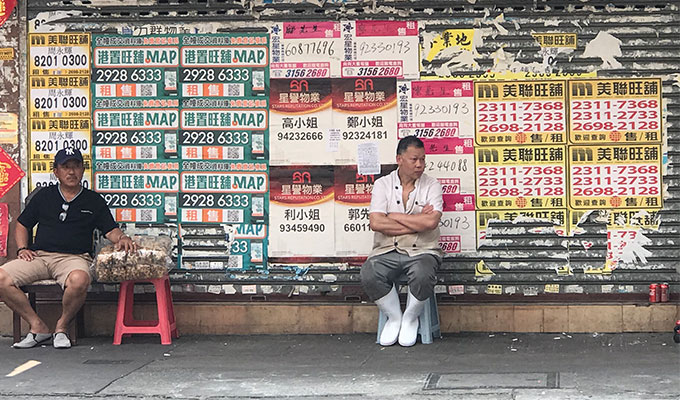
It was known as the Hong Kong Walled City, or The City of Darkness. Infamous for its 30 years of ungoverned vice and much more. Run by the Triads, the city that never saw sunlight was an entity unto itself. Nowadays, a part of it is known as little Thailand, and showing signs of becoming a trendy hotspot for young Hong Kongers.
它被称为香港城墙,或黑暗之城。 臭名昭著的是30年来不受制的恶习等等。 由黑体管理,这座从未见过阳光的城市本身就是一个实体。 如今,它的一部分被称为小泰国,并显示出成为香港年轻人的时尚热点的迹象。
Somewhat typically, I was in Hong Kong on a visa run. Having had only 1 day to prepare for my trip, and not knowing anything about the districts of the island or where to stay, I randomly picked a hotel that was in a place close to the visa office called Kowloon City. After dumping my bags in my room and locking away my very very important passport pick-up form, I set out to explore this city that was to be my home for the next 5 days.
有点像,我在香港办理签证。 我只有1天的时间来准备旅行,对岛上的地区或住宿地点一无所知,我随机选择了一家靠近九龙城签证办公室的酒店。 在把行李扔进房间并锁上我非常重要的护照领取表后,我开始探索这个未来5天的家城市。
As I wandered the streets, with familiar Chinese characters before my eyes and Cantonese trailing in the air around my ears, I came across traditional medicine shops, massage parlours and roasting ducks, before I began to smell something also quite familiar; the sweet aroma of tropical fruit mixed so well with the burning of incense.
当我在街上徘徊时,熟悉的汉字在我眼前,粤语在我耳边的空气中飘荡,我遇到了传统药店、按摩店和烤鸭,然后我开始闻到一些非常熟悉的东西;热带水果的甜美香气与烧香很好地融合在一起。
It was this undeniable South East Asian Bangkok blend of tiger balm and durian that made me look around and take notice. I was standing on South Wall Road, where a part of Kowloon’s infamous Walled City once stood. It and the adjacent streets are jam packed with everything Thai, while monks in orange robes stroll the streets, collecting donations outside Thai shops, markets and restaurants.
正是这种不可否認的东南亚曼谷的虎脂和榴蓮的融合,让我环顧四周,注意到了。 我站在南牆路上,九龍臭名昭著的城牆的一部分曾經矗立在那裡。 它和邻近的街道上挤满了泰国的一切,而穿着橙色长袍的僧侣在街上漫步,在泰国商店、市场和餐馆外收集捐款。
I poked my head into a Thai grocery and got talking with the owner, who said, “I lived in Thailand 30 years ago, I was living amongst the Chinese community. When I saw an influx of Thai immigrants beginning to settle in Kowloon, I came back and opened my grocery. That was the nineties and the rent for this shop was HK$1,900, now it’s $9,000! And this is a cheap area in Hong Kong!” The woman confirmed that most Thai immigrants work as labourers or in the services industries. I inquired, “How long has this area been Little Thailand?”. “[Since] not long after the Wall came down”, she answered.
我探出头去一家泰国杂货店,和店主聊了聊,店主说:“30年前我住在泰国,我住在中国社区中。 当我看到大量泰国移民开始在九龙定居时,我回来开了一家杂货店。 那是九十年代,这家店的租金是1900港元,现在是9000港元! 而且这是香港的一个便宜的地方!” 这名妇女证实,大多数泰国移民在劳工或服务业工作。 我问道:“这个地区是小泰国有多久了?”。 “[因为]在墙倒下后不久”,她回答道。
At that point I had never heard of The Wall; what is this mysterious wall of which they speak? I asked around. Handing me my prawn cakes, Thai restaurant owner, Jeff Tsui, told me, “The Kowloon Wall was where the immigrants lived before we came here, it was totally lawless because neither the British nor the Chinese were able to control it. We are in a part of what it was right now”.
那时,我从未听说过《墙》;他们谈论的这堵神秘的墙是什么? 我四处询问。 泰国餐厅老板Jeff Tsui递给我的虾饼,他告诉我:“在我们来这里之前,九龙墙是移民居住的地方,它完全无法无天,因为英国人和中国人都无法控制它。 我们正处于现在的一部分。”
Almost laughing, he went on, “It’s not dangerous these days. Now Kowloon has a lot of families and tourists, in fact I think it’s becoming a popular destination. The Songkran festival is happening at the moment, we will celebrate it in a few days, which the community is preparing for. We are all very close”.
他幾乎要笑了,繼續說:「這些天並不危險。 现在九龙有很多家庭和游客,事实上,我认为它正在成为一个受欢迎的目的地。 宋卡节正在举行,我们将在几天后庆祝,社区正在为之做准备。 我们都很亲近。”
Thailand’s annual water fight, known as Songkran, coincidentally takes place in April, while the Walled City of Kowloon was knocked down in April of 1994. Its beginnings go as far back as the Song Dynasty, where it was used as an outpost for the trade of Salt. The 1842 Treaty of Nanjing saw Hong Kong handed over to the British, but Qing authorities kept a hold of the area and built a defensive wall around it in order to keep an eye on British activities; effectively securing it as Chinese property, surrounded by British land.
泰国一年一度的水战被称为宋卡,巧合的是发生在4月,而九龙城墙于1994年4月被摧毁。 它的起源可以追溯到宋朝,在那里它被用作盐贸易的前哨。 1842年《南京条约》将香港移交给英国,但清政府保留了该地区,并在其周围建造了一堵防御墙,以密切关注英国的活动;有效地将其作为中国财产,被英国土地包围。
When the Qing dynasty fell in 1912, it was left to the British, who basically abandoned it. During the time of the Japanese occupation, the physical wall was taken down and used to construct Kai Tak Airport, leaving only the homes within. After WW2, China reclaimed the city, and as a result of the civil war between the nationalists and the communists, thousands of refugees fled the mainland; their first port of call was to set up shop in the Walled City.
当清朝在1912年灭亡时,它被留给了英国人,他们基本上抛弃了它。 在日本占领期间,实体墙被拆除,用于建造启德机场,只留下房屋。 第二次世界大战后,中国收复了这座城市,由于民族主义者和共产党之间的内战,成千上万的难民逃离了大陆;他们的第一个停靠点是在城墙内开店。
- Yinchuan; Pearl of the Silk Road
- Enchanting Kazakhstan; Steroids on the Steppe
- Wugongshan; Get off of My Cloud!
From then on, until 1994, the British used a “hands-off” approach to the Walled City, leaving it to its own devices and governed only by the Chinese mafia. Thus, during the 60s, 70s and 80s, the city was a no-go zone for British authorities and crime flourished. Legend has it that sunlight never reached the lower levels of the city, while the 50,000 residents used umbrellas when walking the alleyways as water constantly dripped from broken pipes above. The area became known for its illegal doctors and dentists, who provided dubious health care for citizens of the Wall. Yet, while crime ran rampant, it somehow peacefully coexisted side-by-side hard working families, as former residents of the Wall fondly reveal in a BBC documentary.
从那时起,直到1994年,英国人对城墙采用“不接触”的方法,让它自行控制,只由中国黑手党统治。 因此,在60年代、70年代和80年代,这座城市是英国当局的禁区,犯罪蓬勃发展。 传说中,阳光从未到达城市的低层,而5万名居民在小巷里行走时使用雨伞,因为水不断从上方破碎的管道中滴落。 该地区以其非法医生和牙医而闻名,他们为隔离墙的公民提供可疑的医疗保健。 然而,正如前墙居民在BBC纪录片中深情地透露的那样,虽然犯罪猖獗,但不知何故,努力工作的家庭并肩共存。
The majority of the former Walled City is now a beautiful city park, with parts of the area, such as Little Thailand, soldiering on in one of the most densely populated, challenging and most expensive places on Earth. So, the next time you are in Hong Kong (whether by choice or not), pry yourself away from the glitz and glamour of Causeway Bay, and check out from where all those martial art films of the 80s got their inspiration.
前城墙的大部分现在是一座美麗的城市公園,該地區的部分地區,如小泰國,在地球上人口最稠密、最具挑戰性和最昂貴的地方之一。 所以,下次你来香港时(无论是否自愿),请远离铜锣湾的浮华和魅力,看看80年代所有武术电影的灵感来源。