



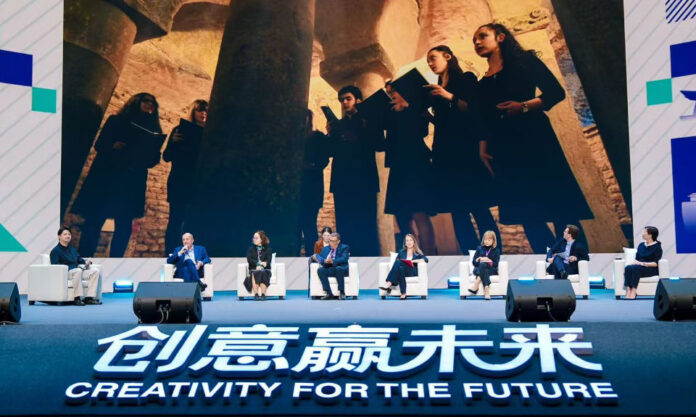



Somewhere between the blue-washed stage lights and the tranquil waters of Lake Li in Wuxi, a bigger question hung in the air last week. Can culture still move cities forward in the age of AI, and can tourism grow into something sustainable but not clichéd without losing its soul?
Inside Studio No. 12 at the Wuxi National Digital Film Industrial Park, that question was given a soundtrack. The “Encounter – Enlighten” Creative Cities Dialogue Wuxi brought together UNESCO officials, city delegates, tourism thinkers and music people under one blunt promise on the screen behind them; Music for Better Cities.
It was not the sort of slogan that survives long on charm alone. By the end of the day, however, Wuxi had made a fair case that culture can do more than entertain. It can build an economy, sharpen a city’s identity and make tourism more sustainable.
The argument rested on scale as much as mood. Speakers ranged from local officials representing Wuxi’s Binhu District, to international culture heavyweights, such as Denise Bax of the UNESCO Creative Cities Network, together with Jose Chong of UN-Habitat and Sandra Carvão of UN Tourism. Delegates also arrived from Pesaro, Daegu, Ipoh, Metz, Essaouira and Evian. Wuxi, which joined the UNESCO network last October as a Creative City of Music, was not merely showing off a new badge. It was trying to show how music, heritage, film and digital tools might turn a visit into a longer stay and a city into something visitors remember.
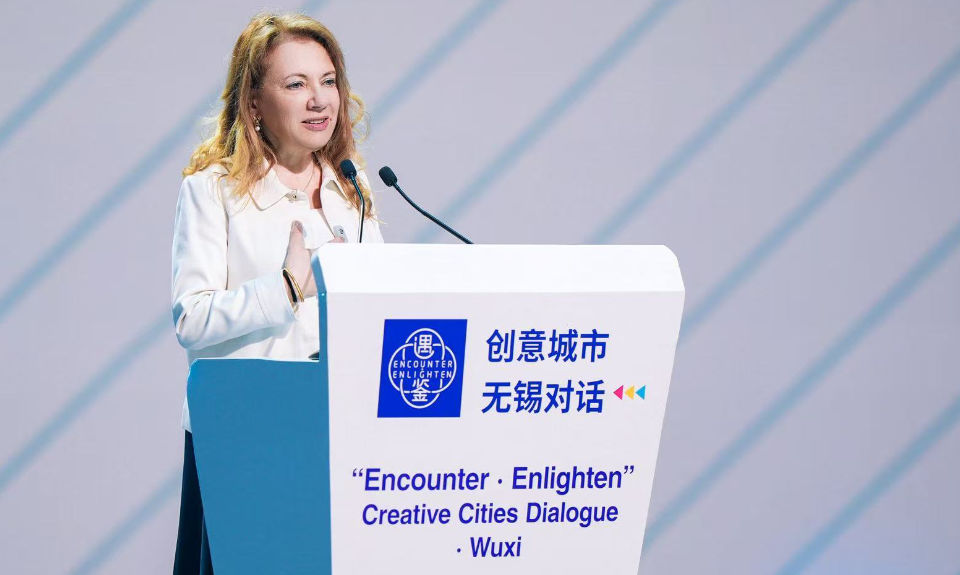
In practical terms, that means delegates were not kept inside a conference bubble. They were sent into the city, onto the Grand Canal, through Huishan and into Yingyue Li, where the point was not simply to admire scenery but to test whether culture can be packaged without being flattened.
That matters because Wuxi is not selling itself as just another pretty city with a nice old quarter and a convenient high-speed rail stop. After joining the UNESCO Creative Cities Network as China’s first World Music City last year, it now has a title to defend. Wuxi’s smart argument was that a place has to remain messy enough to feel alive. It has to keep a little roughness. Otherwise every destination begins to feel as if they are rolling out the same concept in different weather.
Music Gives a City Texture, not Just a Tourist Hook
That practical work begins with memory. Wuxi has long in many ways been musical capital of its own, from erhu traditions to wider Jiangnan sensibilities that travel through water, gardens and along cobbled streets. What the city appears to understand is that tourists do not come back for slogans. They return for texture. They return for the feeling that a place has its own rhythm and is not just borrowing one.
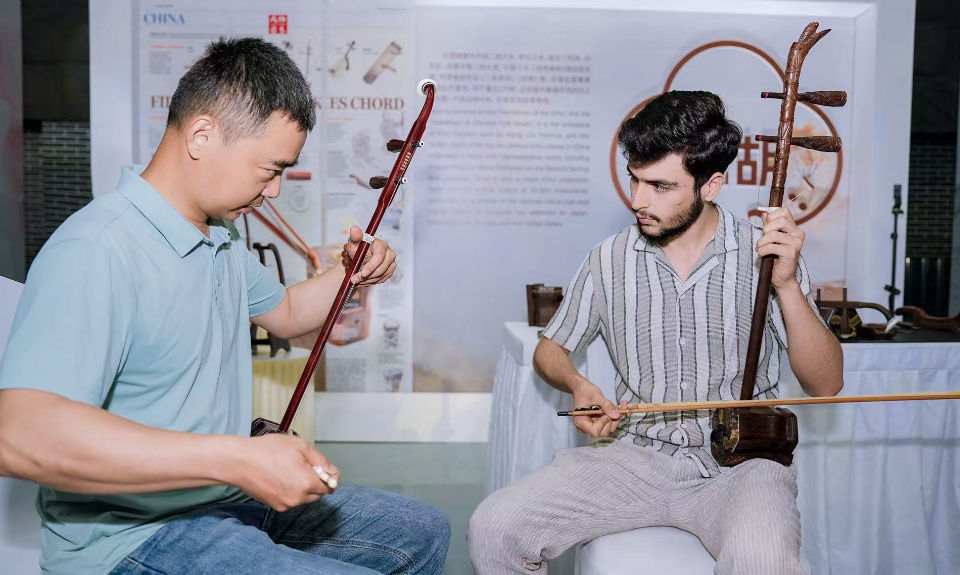
Meanwhile, the overseas delegates brought useful proof that this is not only a Chinese question. Essaouira has built a tourism identity around its Gnawa music and layered coastal heritage. Pesaro leans on opera and Rossini without becoming a museum piece. Evian long ago learned how to turn water, landscape and wellness into a full civic brand rather than a single attraction. That which linked those examples in Wuxi was a simple truth; culture works best in tourism when it is not treated as decoration after the main economic decisions have already been made.
AI Can Help but It Cannot Feel Wonder
That was also where AI entered the room with some force. One of the day’s headline moments was the release of Wuxi Impression, an AI co-created music piece, alongside a global call for theme music inspired by the city. There was a risk that such gestures might feel gimmicky. Instead, they landed as part of a larger question about authorship, participation and whether technology can widen cultural access without draining away mystery.
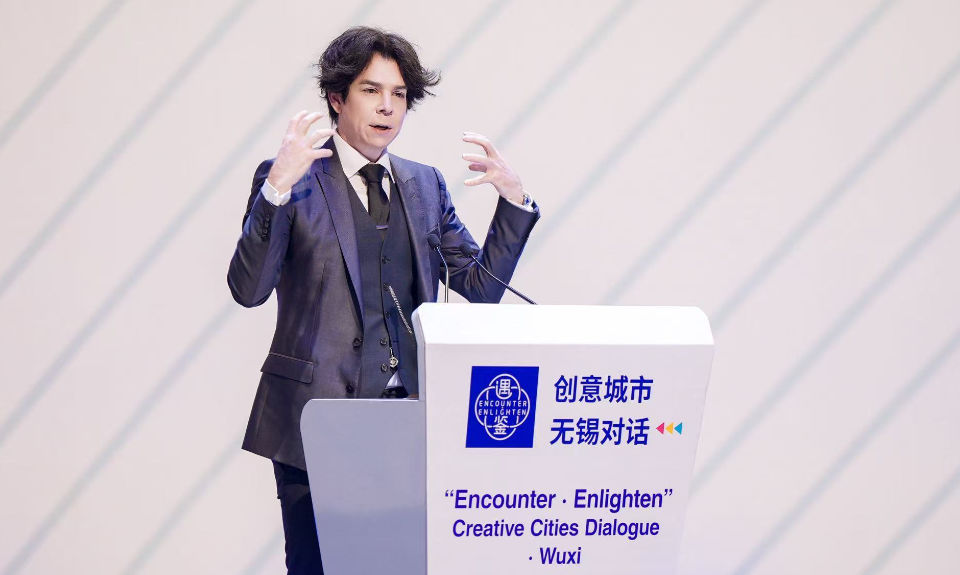
Fernando Garibay, the Grammy and BMI award-winning producer and scholar, gave that issue its clearest human voice. In an interview with this reporter after his speech at the event, he was relaxed but pointed. “So long as that black box of human creativity exists,” he said, “the value proposition remains intact.” It was a striking answer because it did not reject AI. It simply put a limit around what machines can claim.
In a 1 minute plus answer to the question, “Where is the the heartbreak [in AI-generated music]?”, Garibay revealed that he has studied three Ph.Ds on that very subject. By way of response, there was little else to say. Except perhaps, to express respect.
Yet what he was really defending was not job protection or artistic snobbery. It was uncertainty; human creativity still resists full explanation, let alone outright replication. AI may process patterns at extraordinary speed. It may assist, simulate and scale. But the reason a melody wounds, or heals, or suddenly makes a city feel like itself, remains harder to pin down.
Wuxi itself seemed to grasp all this. The city was not presenting AI as a replacement for culture. It was presenting it as an amplifier.

The canal night tour, described in local coverage from Wuxi Daily, blended holographic water screens, AR effects and live performance with the older drama of white walls, black tiles and slow water. That mix worked because the technology was there to reveal place, not to bury it.
The same principle appeared in the tourism dialogue material. Yingyue Li was framed around the classic music IP of Erquan Yingyue and a broader model of cultural IP, music and national trend art. Yixing’s Yaohu Town it was all presented through intangible heritage, ecology and performance. These are not minor design choices. They suggest a city trying to move tourists from passive sight-seeing into experience shaped by narrative.
There is, of course, a danger in all this. Once every city talks about immersion, co-creation and smart cultural experience, the vocabulary itself becomes generic. Visitors can smell that kind of sameness quite quickly. A sustainable-tourism model cannot depend on endless novelty or amplification. At some point, a city has to trust the force of what is already there.

And that is what Wuxi already has a lot of. It has canal memory, industrial memory, musical memory and the visual softness of Jiangnan, but it also has an active film park and a willingness to speak in the language of innovation without sounding completely synthetic. Thursday’s event did not solve the whole problem of modern urban tourism. It did, however, show that Wuxi is asking the right question.
By the end, the answer seemed less abstract. Yes, if cities use technology to sharpen identity rather than blur it. Yes, if tourism remains human-scaled enough to leave room for feeling. And yes, if music, memory and place are still allowed to sound like themselves.