


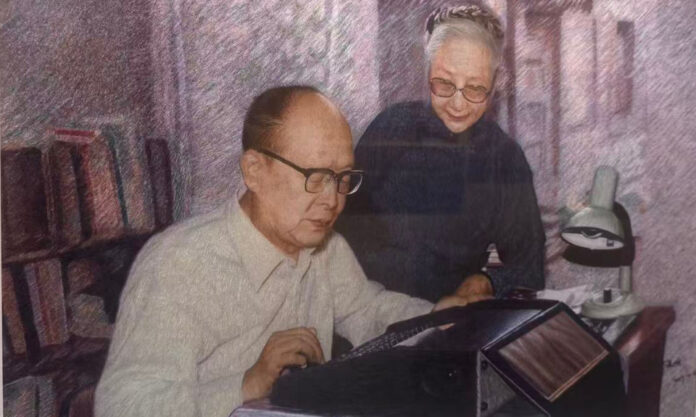
Somewhere along a quiet lane by Changzhou’s old canal, a man who changed the sound of modern China still sits in the half-light. His former home is full of memory, sorrow and wit; yet the world he helped pronounce feels strangely absent. For this is the man credited with the invention of a linguistic miracle, without which the world would be lost.
在常州古运河旁一条安静的小巷里,一个改变了现代中国声音的人仍然坐在昏暗的灯光下。他的故乡充满了记忆、悲伤和智慧;然而,他帮助创造的世界却让人感觉奇怪地缺席。因为这个人被认为发明了语言奇迹,没有这个奇迹,世界就会消失。
Zhou Youguang is usually introduced as the father of Pinyin, though even that title feels a little too neat. He was born in 1906 in Changzhou’s Qingguo Alley, studied economics, worked in banking and only later stepped into language reform; history often hides its sharpest turns in such side doors.
周有光通常被称为拼音之父,尽管这个头衔感觉有点太简洁了。 1906年,他出生于常州庆国巷,学过经济学,在银行工作,后来才涉足语言改革。历史常常将其最尖锐的转折隐藏在这样的侧门中。
His life stretched across almost the whole modern Chinese century. There was study at St John’s University in Shanghai, time at Guanghua University and in Japan, then war, flight and loss. There was work in finance, years abroad and finally a late turn towards the project that would make his name familiar to generations of schoolchildren.
他的一生几乎跨越了整个近代中国世纪。有在上海圣约翰大学学习、在光华大学和日本学习的经历,然后是战争、逃亡和损失。他从事过金融工作,出国多年,最后才转向这个项目,这使他的名字为几代学童所熟悉。


According to the material presented inside Zhou’s former residence in Changzhou, and to Chinese biographical sources on his life and work, he was never a narrow specialist. He belonged to several worlds at once; commerce and scholarship, Jiangnan elegance and wartime hardship, family warmth and public duty. That breadth matters. Pinyin did not come from a machine mind.
根据周常州故居内展示的材料以及有关他的生活和工作的中国传记资料,他从来都不是一个狭隘的专家。他同时属于几个世界;商业与学术,江南风雅与战时艰辛,家庭温馨与公职。这个广度很重要。拼音不是来自机器思维。
A Banker Turns His Mind to the Fate of Language
一位银行家将注意力转向语言的命运
When the new state began serious work on language reform in the 1950s, Zhou joined the committee behind the Hanyu Pinyin Scheme, formally adopted in 1958. One panel in the residence quotes him with simple force; “The making of the Hanyu Pinyin Scheme was a major event in the cultural life of the Chinese people”.
当新国家在 20 世纪 50 年代开始认真开展语言改革工作时,周加入了 1958 年正式通过的汉语拼音方案背后的委员会。 “汉语拼音方案的制定是中国人民文化生活中的一件大事”。
That sounds official, but the effect was deeply personal. Pinyin did not replace Chinese characters. It gave them a bridge. It helped children learn, dictionaries function and place names travel. In time, it helped Chinese move across borders and later across keyboards and screens with new ease.
这听起来很官方,但其效果却是非常个人化的。拼音并没有取代汉字。它给了他们一座桥梁。它帮助孩子们学习、字典功能和地名旅行。随着时间的推移,它帮助中国人跨越国界,后来更轻松地跨越键盘和屏幕。
Zhou himself disliked inflated labels. In remarks displayed from his hundredth birthday celebration, he says, “Do not call me a linguist; I am at most a language worker.” It is a marvellous line. There is humility in it, but also discipline. Men who alter daily life on such a scale rarely need to boast.
周本人也不喜欢浮夸的标签。他在百岁生日庆典上的讲话中说:“不要叫我语言学家,我顶多是一个语言工作者。”这是一条奇妙的线。其中有谦卑,但也有纪律。如此大规模地改变日常生活的男人很少需要自夸。
And then there is the irony. For a man who helped give Chinese its most famous Roman doorway, the signage inside his former residence offers almost no English at all. That feels especially odd in Changzhou, where the standard of public English is generally rather good. Here, of all places, the bridge suddenly abruptly stops.
讽刺的是。对于一个为中国人建造了最著名的罗马大门的人来说,他故居内的标牌几乎没有英文。这在常州感觉尤其奇怪,因为那里的公共英语水平普遍相当不错。在所有地方中,桥突然停了下来。

In a House Where Love, Loss and Wit Still Linger
在爱、失落和智慧依然萦绕的房子里
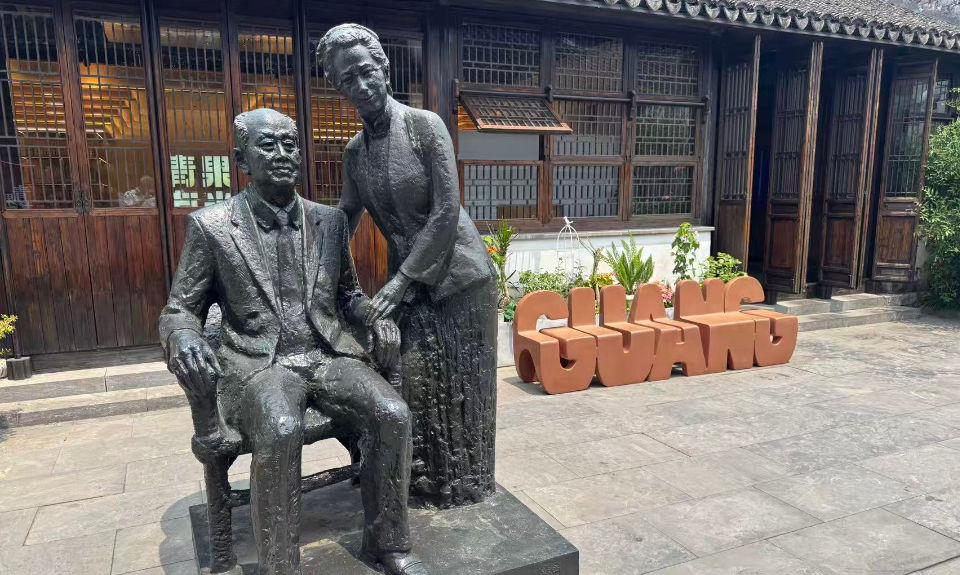
Still, the residence succeeds because it is not trapped in reverence. It feels lived in. It remembers the husband as much as the scholar. Zhou and Zhang Yunhe were married for more than 70 years, and one panel preserves his playful line on marriage; “In old times, couples raised their eyebrows together; today we raise our cups together.”
尽管如此,这座住宅还是成功了,因为它没有陷入崇敬之中。它给人一种生活的感觉。它像学者一样记得丈夫。周和张云鹤结婚已有 70 多年,其中一幅图画保留了他对婚姻的戏谑台词; “古时夫妻齐眉,今举杯共”。
The joke lands because the love behind it is visible everywhere. Another display quotes Zhou reflecting that husband and wife need not share exactly the same tastes; difference, he suggests, may enrich a life rather than weaken it. In a house devoted to a writing system, the warmest traces are often domestic.
这个笑话之所以能流传开来,是因为它背后的爱随处可见。另一项展示引用了周先生的话,反映丈夫和妻子不需要完全相同的品味;他认为,差异可能会丰富而不是削弱生活。在专门用于书写系统的房子里,最温暖的痕迹往往是在家里。
Yet the century was not gentle with him. The residence recalls the family’s wartime flight to Chongqing and the instability that followed. One panel notes that in Chongqing the family moved house 36 times. Another remembers the bombing. The man later associated with order and standardisation lived through years defined by disruption.
然而这个世纪对他并不温柔。这座住宅让人回想起战时一家人逃往重庆的经历以及随之而来的不稳定局势。一位专家小组指出,在重庆,这家人搬了 36 次家。另一个人记得爆炸事件。这位后来与秩序和标准化联系在一起的人经历了被颠覆所定义的岁月。
He also never quite lost Changzhou. One exhibit quotes him saying, “I kept running farther away, from Changzhou to Suzhou to Shanghai to foreign countries.” But the same display insists that distance did not erase feeling. His ties with his hometown deepened in later life, and the pride of local people in him became part of the story too.
他也从未完全失去常州。一个展览引用了他的话说:“我不断地跑得更远,从常州到苏州到上海到国外。”但同样的显示器坚持认为,距离并没有消除感觉。他与家乡的联系在后来的生活中加深了,当地人对他的自豪感也成为故事的一部分。
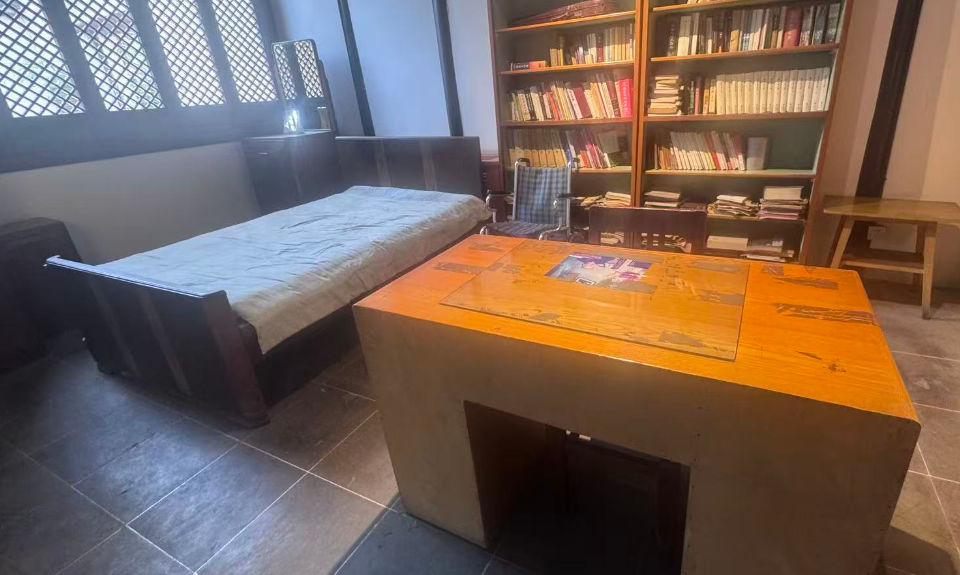
So back in that quiet lane by the canal, the half-light makes sense. Zhou Youguang helped modern China sound itself out to its own people and to the wider world; but his old home offers something better than reverence. It gives us the man behind the system, and returns us to that first dim room where history still seems to speak softly.
所以回到运河边那条安静的小巷里,半光是有道理的。周有光帮助现代中国向本国人民和世界展示了自己的声音;但他的老家提供的不仅仅是尊敬。它为我们提供了系统背后的人,让我们回到第一个昏暗的房间,历史似乎仍在轻声说话。