



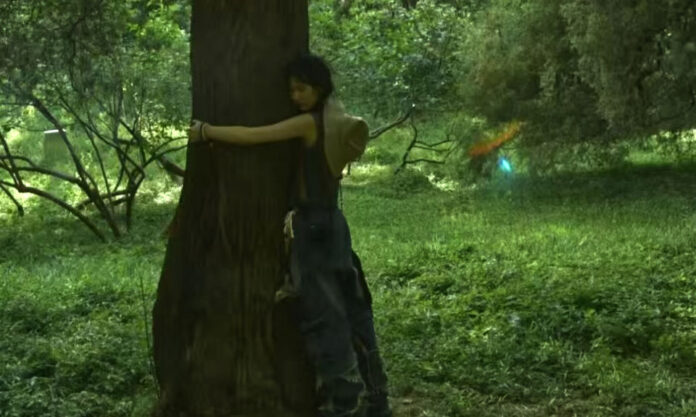



Tree hugging is back! That’s on account of more and more young people in China on the brink of going crazy. So they are increasingly seeking emotional stability through the form of healing which the simple act of hugging a tree represents.
Remember the trend which became a concept spreading globally in the 1980s and 90s, adopted by environmental groups, especially in the U.S. and Europe? Then though, their tree-hugging was a means for peaceful protest against deforestation.
Today in China, it’s a different story altogether. Now, tree hugging is a way for young people to cope with depression, a lack of sleep, workplace stress or a lack thereof through unemployment.
A Global Wellness Institute (GWI) report from 2023 shows that the market for mental wellness in China is approximately ¥139.9 billion annually. The number that is clearing growing is contributed to by many areas such as meditation, mindfulness and sleep health. Worldwide, the global-healing economy in 2025 surpassed US$7 trillion.
Internet user “Greenz” is one such Chinese tree hugger. She started taking tree hugging seriously in May of 2023, after a period of very severe depression and confusion.
Speaking with Shanghai Yitiao (上海一条), Greenz said, “I had just resigned from an e-commerce company headquarters in Nanjing. My day job was the “996” mode [0900-2100; 6 days per week], where I have to work until 02:00. Then I had to return during rush hour to make tea for the company leaders at 09:00 the next morning”.
Mainstream media may sometimes pejoratively describe such converts as “hippies” or “radical tree-huggers”, the reality is everyone’s tale is different.
Hence the words of another; “As a sound therapist and sleep healer, I often feel lucky. Three years ago, the death of my mother was a severe blow to me. In order to be free from suffering, I went to a temple for more than a dozen days. Every day, in the morning clocks of the temple, I heard the healing energy of all things in the world.”
In 2023, my final year as a graduate student, I hadn’t started work yet, but I already felt the pressures I was going to face in the workplace, and holding a tree was a way to release my anxietyt.
The act of hugging trees has probably existed for millennia; humans have long felt spiritual or emotional connections to trees. Ancient cultures such as the Celts and Druids revered sacred groves. Some would argue such civilizations long predate even the Chinese.
Then there are the indigenous traditions in North America, Asia, and Africa which often feature rituals connecting people to trees, sometimes as symbols of life, wisdom or protection.
Another anonymous contributor to the aforementioned article on the subject said, “After college, and when I began to be exposed to nature, my world began to grow wider and my mental state improved. I was in New Zealand as an undergraduate in 2015, and I was in a very ecological town with easy access to the woods and nature”.
She added, “Once, I went hiking with some friends in the Whakarewarewa Redwoods Forest. The tallest sequoia in the forest is more than 70 meters tall, and it takes two or three people to hold one. I took off my shoes and stepped barefoot on the dirt. The moist air and the smell of plants brought by the breeze made me completely immersed in the forest for the first time.”
“I felt I was embracing a very old creature on Earth, in which I could break free from the ‘social clock’ and be allowed to waste time. I felt a true understanding … For a moment when I held the tree, I was left with the world and nothing else.”