






A recent study published in conjunction with the Nanjing University of Information Science and Technology (NUIST) has found that, despite the fact PM2.5 is falling, surface ozone pollution is on the rise.
最近与南京信息工程大学 (NUIST) 联合发表的一项研究发现,尽管 PM2.5 正在下降,但地表臭氧污染却在上升。
The study, that appears in “Proceedings of the National Academy of Sciences” (PNAS), was contributed to by NUIST and Harvard’s John A. Paulson School of Engineering and Applied Sciences (SEAS).
这项研究发表在《美国国家科学院院刊》(PNAS) 上,由 NUIST 和哈佛大学约翰·A·保尔森工程与应用科学学院 (SEAS) 共同参与。
Over the last 5 years, 1,000 air-quality monitoring stations have been collecting much-needed environmental data from across China. Since the government launched its war on air pollution 5 years ago, the country’s worrying PM2.5 (Particulate Matter 2.5) is said to have dropped by 40 percent. Yet, researchers now say ground-level ozone pollution is worsening.
过去 5 年里,1000 个空气质量监测站一直在中国各地收集急需的环境数据。自五年前政府发起空气污染攻坚战以来,该国令人担忧的 PM2.5(颗粒物 2.5)据说已经下降了 40%。然而,研究人员现在表示,地面臭氧污染正在恶化。
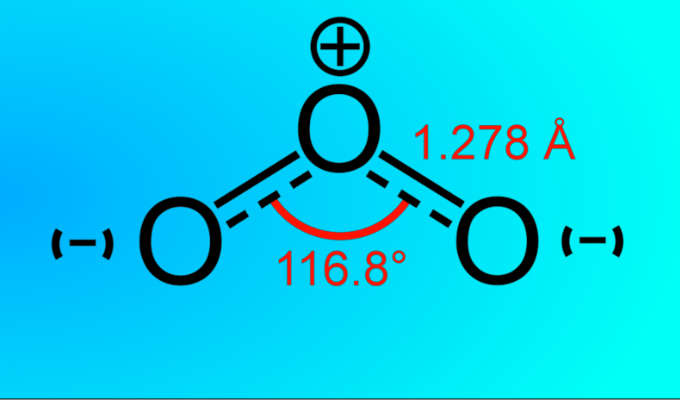
The oxidation of Volatile Organic Compounds (VOCs) forms radicals, which, in turn, ignites a reaction between oxides and nitrogen, producing ozone when in sunlight. Both are the product of fossil fuel combustion and industrial sources.
挥发性有机化合物 (VOC) 氧化形成自由基,进而引发氧化物和氮气之间的反应,在阳光下产生臭氧。两者都是化石燃料燃烧和工业来源的产物。
Speaking exclusively with The Nanjinger, Dr. Li Ke, a researcher from Harvard University, commented, “To reduce PM2.5 is the first thing we should do, since PM2.5 is more harmful than surface ozone… But in consideration of the increasing ozone trend reported by our study, a joint action should be taken to reduce public exposure”.
哈佛大学研究员李科博士在接受《南京人》独家采访时评论道:“减少 PM2.5 是我们首先要做的事情,因为 PM2.5 比地表臭氧的危害更大……但考虑到我们研究报告的臭氧不断增加的趋势,应该采取联合行动来减少公众接触PM2.5”。
The finding to which Dr. Li is referring is the discovery that particulate matter actually acts like a sponge for the free radicals needed to produce ozone. Particulate Matter essentially sucks the free radicals up, preventing ozone from forming.
李博士所指的发现是,颗粒物实际上就像海绵一样,吸收着产生臭氧所需的自由基。颗粒物本质上是吸收自由基,防止臭氧形成。
“The most important cause of the increasing ozone in [the] NCP [North China Plain] appears to be the decrease in PM2.5, slowing down the sink of hydroperoxy radicals and thus speeding up ozone production”, research published by the PNAS reveals. “Drastic air pollution control in China since 2013 has achieved sharp decreases in fine particulate matter (PM2.5), but ozone pollution has not improved”.
《美国国家科学院院刊》发表的研究显示,“华北平原臭氧增加的最重要原因似乎是 PM2.5 的减少,减缓了氢过氧自由基的沉降,从而加速了臭氧的产生”。 “2013年以来,中国大力治理空气污染,细颗粒物(PM2.5)大幅下降,但臭氧污染却没有得到改善”。
“This study highlights the importance of reducing ozone precursors, while the priority of air quality improvement is to control particulate pollution”, Dr. Li said. “I think it [the finding] will help the government to better understand current air-pollution issues. I am sure they will [provide funding support], because air pollution issues in China still have a long way to go”.
“这项研究强调了减少臭氧前体的重要性,而改善空气质量的首要任务是控制颗粒物污染”,李博士说。 “我认为[这一发现]将有助于政府更好地了解当前的空气污染问题。我相信他们会[提供资金支持],因为中国的空气污染问题还有很长的路要走”。
Dr. Li finished his PhD at the Chinese Academy of Sciences where he was working on air pollution. “I started with this project because we have observed an increasing trend of surface ozone in recent years in China, which is a bad sign for the public. Then we tried to do something”, said Li.
李博士在中国科学院完成了博士学位,当时他的研究方向是空气污染。 “我开始这个项目是因为我们观察到近年来中国地表臭氧有增加的趋势,这对公众来说是一个坏兆头。然后我们尝试做一些事情”,李说。